Noen ord om det å konstruere problemer
Du må gjerne konstruere problemer rundt det å være en hvit nordmann, men da må det også være lov for alle oss andre å påpeke at du oppfører deg som en fremmedfiendtlig idiot.
For en del år tilbake, jeg tror det var i 2004, satt jeg på et hotellrom sammen med to venner. Jeg satt litt tilbaketrukket, mens mine venner diskuterte alt mellom himmel og jord. Etter en stund tok samtalen en nokså interessant vending da de to kritthvite nordmennene begynte å diskutere dagens USA. Diskusjonen ble fort høylydt, intens og preget av stor felles forargelse over tingenes tilstand. Så hva utløste dette voldsomme sinnet? Var det den pågående krigen mot Irak? Var det landets bruk av dødsstraff, eller var det kanskje den stereotypiske fremstillingen av overvektige amerikanere? Nei, nei og atter nei.
Det mine to venner ergret seg så enormt over var at det i datidens USA visstnok var slik at afroamerikanere ofte kalte hverandre for ”brothers”. Enkelte mørkhudede amerikanere utrykte altså en form for fellesidentitet gjennom å hilse hverandre med et ord som beskriver familiære og nære forbindelser. Nåvel, mine veldig hvite, veldig norske og, vil jeg gjerne tilføye, veldig oppegående venner fant dette veldig provoserende. De så på det som en form for potensiell utestengelse fra fellesskapet. For begge mine venner var enige i at de selv ikke bare kunne kalle brødre som ikke var brødre for brødre. Ja det hadde rett og slett blitt sett på som litt rart hvis de selv en gang skulle verbalt tilnærme en afroamerikaner som ”bror”. Nå var det slik at de to ikke hadde vært i USA, eller hadde noen nærgående planer om å besøke landet, så den forargelse og frykt de følte var kun på et teoretisk plan. Men det var en debatt som visstnok måtte tas, for ”slike tilstander” kunne vi også få her til lands.
Jeg lærte av denne samtalen at hvis majoritetsbefolkningen ikke har tilstrekkelig med reelle problemer knyttet til en nasjonal, religiøs, eller etnisk minoritetsgruppe, så vil deler av majoritetsbefolkningen straks anstrenge seg med å konstruere slike problemer. Og det er klart, hvis man først begynner å konstruere problemer, så har alle saker et potensiale! Slik sett er ingen hendelse eller samfunnstrekk for lite eller ubetydelig til at man ikke kan konstruere en helt absurd problemstilling ut av det hele.
Nettopp derfor kan man i enkelte fjerntliggende bygder finne mennesker som helt oppriktig ser på fremveksten av minareter i Norge som et av deres største hverdagslige problemer. Nettopp derfor har du garantert en helt vannlig venn, kanskje til og med flere venner, som ser noe voldsomt problematisk i at en skole i Ålesund vil dele ut papirflagg med trykk av både det norske flagget og enkelte andre flagg i forbindelse med 17.mai. Derfor kan en tilsynelatende oppegående forsamling mennesker som Sosialistisk Ungdom bruke store deler av sitt landsmøte til å fordype seg i spørsmålet om bruk av hijab i politiet i et år der mesteparten av Europa er i dyp krise.
For hvis du som majoritetsperson først vil føle deg tråkket på – hvis du vil leve i villfarelsen om at din identitet er i dyp eksistensiell fare - så klarer du helt sikkert det. Du må bare grave deg langt nok ned i de absurde og virkelighetsfjerne problemstillingers verden. Du må dessuten gjerne akkompagnere nedgravingen med rop om at man må tørre å ta debatten. Det er greit det, men da må det også være lov for alle oss andre å påpeke at du oppfører deg som en fremmedfiendtlig idiot.
lørdag, april 27, 2013


mandag, mai 07, 2012
Audun-festivalen!
I år blir det en litt annerledes Audun-festival. Der festivalene tidligere har vært tette og kompakte, med mye opplegg på få dager, tar vi år over hele jævla juni! Festivalen er som alltid på 7 dager, men er altså i år spredd ut over en hel måned. Det blir som vanlig festivalpass, gaver til meg og karakterkort. Vi gleder oss!
Fredag 08.06 – Festivalstart! Fredagspils på St. Hanshaugen.
Lørdag 09.06 – Bare Egil Band på Rockefeller.
Onsdag 20.06 – Et av festivalens desiderte høydepunkter på Bjerke Travbane!
Torsdag 21.06 - Lars-(fri?) dag. Vi gjør alt som Lars liker å gjøre!
Søndag 24.06 – Skeid mot Kjelsås på Bislett Stadion.
Fredag 29.06 – Grilling ved pent vær. X-box-turnering ved dårlig vær.
Lørdag 30.06 – Avslutning av festivalen. Stor fest på St. Hanshaugen!
Vi søker etter fintfolk som kan dokumentere mest mulig av festivalen for denne bloggen. Lønn fåes i himmelen. Ta kontakt på audun.aahlin(alfakrøll)gmail.com og bli en del av sommerens vakreste eventyr du også!
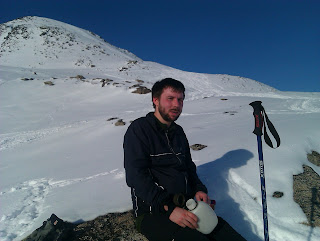
Foreløpige hedersgjester er Ina og Marse.
I år blir det en litt annerledes Audun-festival. Der festivalene tidligere har vært tette og kompakte, med mye opplegg på få dager, tar vi år over hele jævla juni! Festivalen er som alltid på 7 dager, men er altså i år spredd ut over en hel måned. Det blir som vanlig festivalpass, gaver til meg og karakterkort. Vi gleder oss!
Fredag 08.06 – Festivalstart! Fredagspils på St. Hanshaugen.
Lørdag 09.06 – Bare Egil Band på Rockefeller.
Onsdag 20.06 – Et av festivalens desiderte høydepunkter på Bjerke Travbane!
Torsdag 21.06 - Lars-(fri?) dag. Vi gjør alt som Lars liker å gjøre!
Søndag 24.06 – Skeid mot Kjelsås på Bislett Stadion.
Fredag 29.06 – Grilling ved pent vær. X-box-turnering ved dårlig vær.
Lørdag 30.06 – Avslutning av festivalen. Stor fest på St. Hanshaugen!
Vi søker etter fintfolk som kan dokumentere mest mulig av festivalen for denne bloggen. Lønn fåes i himmelen. Ta kontakt på audun.aahlin(alfakrøll)gmail.com og bli en del av sommerens vakreste eventyr du også!
Foreløpige hedersgjester er Ina og Marse.
torsdag, april 12, 2012
Litt heia Vågard, mest heia Fett!
Debatter om rapmusikk og hiphopkultur i Norge blir som regel veldig kleint og frustrerende. Preget av kunnskapsløshet som disse debattene ofte er. Slik sett er Vågard en etterlengtet berikelse, med sine evner til å skrive, og mene, veldig mye, ofte mye bra, om relativt sære temaer. Det betyr imidlertid ikke at alt han skriver er uproblematisk.
I fjor høst inviterte Fett til debatt om kvinnesyn i hiphop på Litteraturhuset i Oslo. Debatten holdt dessverre ikke så alt for god kvalitet. Hovedproblemet, som også ble påpekt under debatten av både publikummere (Mathias Rødahl) og deltakere (Vågard og Øyvind Holen), var at selve premisset for problemstillingen var utdatert. Å bruke et kvinnesyn som var gjeldene for cirka 10 år siden i norsk og amerikansk hiphop som utgangspunkt for en diskusjon om kvinnesyn i dagens hiphop blir selvfølgelig veldig feil. Direkte ufint ovenfor dagens rappere er det også.
Om ikke mainstreamrap i dag domineres av ”balleløse, unge menn som snakker om joggesko og grining over lett fordøyelige beats”, som Vågard skriver, så kan man i hvert fall enes om at mainstreamrap i dag domineres av artister som har en annerledes bakgrunn og måte å utrykke seg på enn det den gjennomsnittlig mainstreamrapperen hadde for ti år siden. I tillegg er det slik at mange av de største artistene som tidligere var helt, eller delvis, forbundet med gangsterrap, som Jay-Z, Dr. Dre, 50 Cent, Snoop Dogg og Birdman, i dag har opparbeidet seg en sosioøkonomisk posisjon som gjør det særdeles vanskelig å fortsette å utrykke seg innenfor postgangsterismens rammer.
Det er derfor enkelt å ha forståelse for at Vågard, og andre blir forbannet, når rapmusikk, gjerne i sammenheng med sjangerens kvinnesyn, for ’nte gang blir diskutert av mennesker som strengt talt verken har bakgrunnskunnskap eller kompetanse til å kommentere sjangeren. Samtidig som det er enkelt å ha forståelse for at Vågard ble forbannet når Mari Røsjø under debatten, etter å ha kjørt seg selv opp i et hjørne, lirte av seg noen teite og løgnaktige kommentarer om A-Lagets musikkvideoer. (Selv om dette strengt talt kanskje ikke var en så stor sak som det nå har blitt gjort til.)
Dette betyr imidlertid ikke at en del av Vågards uttalelser er uproblematiske. For hvis jeg skal oppføre meg som den høyt utdannede og delvis elitistiske åndssnobben fra den øvre middelklasse som jeg er, og som jeg har ingen problemer med å være, så er det strengt talt ikke greit å kalle meningsmotstandere for elitistfitter og drittkjerringer. Det negative trykket ligger kanskje på elitist og, øh, dritt, men likevel, det å hele tiden skulle bruke skjellsord knyttet til det kvinnelige kjønn er ganske barnslig, og, vel, litt patetisk.
Definisjonen, som Vågard kommer med, av gangsterraps rolle i afroamerikanske samfunn, som den ”moderne bluesen” er heller ikke uproblematisk. Gangsterrap er, og har alltid vært, en kombinasjon av virkelighet og fantasi, og derfor ikke nødvendigvis noe som den gjennomsnittlige marginaliserte ungdommen i New Orléans kjenner seg igjen i. Spike Lee, David Samuels og Michelle Shocked er bare noen få eksempler på personer som har kommet med velbegrunnede begrunnelser for at gangsterrap kan være noe helt annet enn den moderne bluesen. Det kan like gjerne bli sett på som den moderne formen for minstrel show.
Undertegnede deler i og for seg ikke denne tankegangen, men overdrivelsene og de stadig tilbakevendende stereotypiske fremstillingene av ”svarthet” i gangsterrap gjør at man skal være forsiktig med å definere gangsterrap som en eksklusiv stemme for den ”undertrykte, sinte svarte amerikanske mannens liv”. Det er i så fall en stemme som svært mange afroamerikanske menn vil ha seg frabedt.
Det mest problematiske er imidlertid Vågards reaksjonære karakteristikker av feminisme. Dette har imidlertid Fett allerede svart bra på:
”Vi mener at denne typen båssetting er skadelig av to grunner: For det første fordi det ikke er særlig representative størrelser, vi kjenner simpelthen ikke så mange «sinte mannehatende lesber» eller «1500-kroners-dildo-feminister». Dermed bidrar Vågards beskrivelser til å sementere noen myter som er helt kørka (bare så du vet det Vågard, lesbiske feminister er ofte ganske liberale med hensyn til porno). For det andre så bidrar denne typen negativ stereotypisering til å utdefinere mennesker fra diskusjonen om hva feminisme er eller bør være. Det er helt greit å være uenige, men det var Vågards påstand i Natt&Dag om at han er på lag med de «ekte feministene». Vi reagerte særlig fordi Vågard brukte noen typisk antifeministiske klisjeer for å utdefinere folk fra feminismen.”
Det er, etter min mening, veldig kult at Vågard har blitt en stemme i offentligheten. Både på grunn av A-Lagets musikalske kvaliteter og på grunn av Vågards evner som debattant. Akkurat som det er veldig kult at vi har et solid miljø som har opparbeidet seg en rolle som feministisk vaktbikkje. Det er skuffende nok at Vågard går inn i den reaksjonære og svært lite ærefulle tradisjonen med nedverdigende betegnelser av feministiske meningsmotstandere med sitatet ”sinte lesbefeminister som skal nekte menn å se på porno, til sånne femtenhundrekroners-vibrator-feminister”. Men, det hadde vært mye mer skuffende hvis vi ikke hadde hatt et miljø som sa i fra om dette.
Slik sett har Fett en viktig rolle i å påpeke plattheten og idiotien i alle ”sinte/stygge/missunelige/har-ikke-fått-seg-noe/lesbiske”-betegnelsene som blir slengt rundt om feminister i den norske offentligheten. Men debatten om kvinnesyn i rap generelt og gangsterrap spesielt krever, som Vågard skriver, bakgrunnskunnskap og en god porsjon respekt for kulturen man debatterer, og det er jeg ikke helt sikker på at Fett nødvendigvis har. Slik sett har Vågard et viktig poeng.
Debatter om rapmusikk og hiphopkultur i Norge blir som regel veldig kleint og frustrerende. Preget av kunnskapsløshet som disse debattene ofte er. Slik sett er Vågard en etterlengtet berikelse, med sine evner til å skrive, og mene, veldig mye, ofte mye bra, om relativt sære temaer. Det betyr imidlertid ikke at alt han skriver er uproblematisk.
I fjor høst inviterte Fett til debatt om kvinnesyn i hiphop på Litteraturhuset i Oslo. Debatten holdt dessverre ikke så alt for god kvalitet. Hovedproblemet, som også ble påpekt under debatten av både publikummere (Mathias Rødahl) og deltakere (Vågard og Øyvind Holen), var at selve premisset for problemstillingen var utdatert. Å bruke et kvinnesyn som var gjeldene for cirka 10 år siden i norsk og amerikansk hiphop som utgangspunkt for en diskusjon om kvinnesyn i dagens hiphop blir selvfølgelig veldig feil. Direkte ufint ovenfor dagens rappere er det også.
Om ikke mainstreamrap i dag domineres av ”balleløse, unge menn som snakker om joggesko og grining over lett fordøyelige beats”, som Vågard skriver, så kan man i hvert fall enes om at mainstreamrap i dag domineres av artister som har en annerledes bakgrunn og måte å utrykke seg på enn det den gjennomsnittlig mainstreamrapperen hadde for ti år siden. I tillegg er det slik at mange av de største artistene som tidligere var helt, eller delvis, forbundet med gangsterrap, som Jay-Z, Dr. Dre, 50 Cent, Snoop Dogg og Birdman, i dag har opparbeidet seg en sosioøkonomisk posisjon som gjør det særdeles vanskelig å fortsette å utrykke seg innenfor postgangsterismens rammer.
Det er derfor enkelt å ha forståelse for at Vågard, og andre blir forbannet, når rapmusikk, gjerne i sammenheng med sjangerens kvinnesyn, for ’nte gang blir diskutert av mennesker som strengt talt verken har bakgrunnskunnskap eller kompetanse til å kommentere sjangeren. Samtidig som det er enkelt å ha forståelse for at Vågard ble forbannet når Mari Røsjø under debatten, etter å ha kjørt seg selv opp i et hjørne, lirte av seg noen teite og løgnaktige kommentarer om A-Lagets musikkvideoer. (Selv om dette strengt talt kanskje ikke var en så stor sak som det nå har blitt gjort til.)
Dette betyr imidlertid ikke at en del av Vågards uttalelser er uproblematiske. For hvis jeg skal oppføre meg som den høyt utdannede og delvis elitistiske åndssnobben fra den øvre middelklasse som jeg er, og som jeg har ingen problemer med å være, så er det strengt talt ikke greit å kalle meningsmotstandere for elitistfitter og drittkjerringer. Det negative trykket ligger kanskje på elitist og, øh, dritt, men likevel, det å hele tiden skulle bruke skjellsord knyttet til det kvinnelige kjønn er ganske barnslig, og, vel, litt patetisk.
Definisjonen, som Vågard kommer med, av gangsterraps rolle i afroamerikanske samfunn, som den ”moderne bluesen” er heller ikke uproblematisk. Gangsterrap er, og har alltid vært, en kombinasjon av virkelighet og fantasi, og derfor ikke nødvendigvis noe som den gjennomsnittlige marginaliserte ungdommen i New Orléans kjenner seg igjen i. Spike Lee, David Samuels og Michelle Shocked er bare noen få eksempler på personer som har kommet med velbegrunnede begrunnelser for at gangsterrap kan være noe helt annet enn den moderne bluesen. Det kan like gjerne bli sett på som den moderne formen for minstrel show.
Undertegnede deler i og for seg ikke denne tankegangen, men overdrivelsene og de stadig tilbakevendende stereotypiske fremstillingene av ”svarthet” i gangsterrap gjør at man skal være forsiktig med å definere gangsterrap som en eksklusiv stemme for den ”undertrykte, sinte svarte amerikanske mannens liv”. Det er i så fall en stemme som svært mange afroamerikanske menn vil ha seg frabedt.
Det mest problematiske er imidlertid Vågards reaksjonære karakteristikker av feminisme. Dette har imidlertid Fett allerede svart bra på:
”Vi mener at denne typen båssetting er skadelig av to grunner: For det første fordi det ikke er særlig representative størrelser, vi kjenner simpelthen ikke så mange «sinte mannehatende lesber» eller «1500-kroners-dildo-feminister». Dermed bidrar Vågards beskrivelser til å sementere noen myter som er helt kørka (bare så du vet det Vågard, lesbiske feminister er ofte ganske liberale med hensyn til porno). For det andre så bidrar denne typen negativ stereotypisering til å utdefinere mennesker fra diskusjonen om hva feminisme er eller bør være. Det er helt greit å være uenige, men det var Vågards påstand i Natt&Dag om at han er på lag med de «ekte feministene». Vi reagerte særlig fordi Vågard brukte noen typisk antifeministiske klisjeer for å utdefinere folk fra feminismen.”
Det er, etter min mening, veldig kult at Vågard har blitt en stemme i offentligheten. Både på grunn av A-Lagets musikalske kvaliteter og på grunn av Vågards evner som debattant. Akkurat som det er veldig kult at vi har et solid miljø som har opparbeidet seg en rolle som feministisk vaktbikkje. Det er skuffende nok at Vågard går inn i den reaksjonære og svært lite ærefulle tradisjonen med nedverdigende betegnelser av feministiske meningsmotstandere med sitatet ”sinte lesbefeminister som skal nekte menn å se på porno, til sånne femtenhundrekroners-vibrator-feminister”. Men, det hadde vært mye mer skuffende hvis vi ikke hadde hatt et miljø som sa i fra om dette.
Slik sett har Fett en viktig rolle i å påpeke plattheten og idiotien i alle ”sinte/stygge/missunelige/har-ikke-fått-seg-noe/lesbiske”-betegnelsene som blir slengt rundt om feminister i den norske offentligheten. Men debatten om kvinnesyn i rap generelt og gangsterrap spesielt krever, som Vågard skriver, bakgrunnskunnskap og en god porsjon respekt for kulturen man debatterer, og det er jeg ikke helt sikker på at Fett nødvendigvis har. Slik sett har Vågard et viktig poeng.
fredag, november 25, 2011
I listen over noe sære innlegg. Dette er hva jeg mener om "jødiskheten" i Erica Jongs Fear of Flying. I min oppfattelse noe av det beste jeg har skrevet, og kanskje av interesse for de som har lest novellen.
In what ways might Fear of Flying be said to be a Jewish novel?
“Welcome back! At least those of you who survived Auschwitz, Belsen, the London Blitz and the co-optation of America. Willkommen! Austrians are nothing if not charming.” - Isadora Wing on Freud, Vienna and the ghost of Nazism. (Fear of Flying: 13)
Erica Jong’s Fear of Flying is a historical piece of work. It is iconic due to its sexual frankness. It is daring in its energetic humor. It is the work of a pioneer considering its impact on feminist literature and feminism in general. But Fear of Flying is also groundbreaking in a way that is not about gender or honest recognitions of both men’s and women’s sexual drives. It is a landmark in its combination of hilarity and mockery on the one hand, and the novel’s highly serious issues, Israeli conflicts, Zionism, anti-Semitism and trauma and guilt in post-Holocaust American Jewish communities, on the other.
Time is a central aspect here. Just 12 years after the trial of Adolf Eichmann in Jerusalem and just six years after the Six-Day War, Jong is jokingly making references to Auschwitz, Dachau and Nasser (32 and 211-212). Jong is far from alone in writing about the trauma, the strengthening of identity and other effects that are typically experienced by groups victimized by human rights violations, but she was a pioneer in integrating comedy in such tragic issues. Judaism has a long history of comedy that includes self-irony, as Fear of Flying also shows , but Shoah was still too close to be joked about at this time. Before the trial of Eichmann, it was even too close to talk about the catastrophe at all in most Jewish communities. Jong was together with a handful of other Jewish artists, such as Mel Brooks, Art Spiegelman and Woody Allen, the ones that brought comedy into the world of the Holocaust, and in this respect paved the way for later artists, such as Jerry Seinfeld and Larry David who have, amongst many other things, joked about the bizarre nature of anti-Semitism.
“Gundra Miranda called herself ‘Randy’ and married at eighteen. (…) Despite the seeming rebelliousness of a nice Jewish girl from Central Park West marrying an A-Rab, she led the most ordinary family life imaginable in Beirut. She was almost religiously in favor of Kinder, Küche, and Kirche – especially the Catholic Church which she attended in order to impress the Arabs with her non-Jewishness.” - Isadora Wing on the vulgarity of her sister’s assimilation. (44-45)
The famous Jewish author and scholar Hannah Arendt introduced in her book about Rahel Varnhagen two concepts, the Jew as a “pariah” and the Jew as a “parvenu”. The “parvenu” is the exceptional Jew, the Jew that is desperate for being accepted by the Christian society. As Bernt Hagtvet has explained, the word “parvenu” is not randomly chosen. It characterizes phoniness, struggle and lack of faith. (…) Arendt uses this word as a term to describe the Jew who tries to achieve total assimilation and who willingly gives up his faith, or in other way seeks to blend into the surrounding society (Hagtvet, 2000: XLII-XLIII). What Arendt is really saying with all this is that assimilation is not primarily false or stupid, or ineffectual, but that it is vulgarity. (Hagtvet, 2000: XLIII)
Erica Jong makes it clear that she follows Arendt’s point of view through the character of Isadora’s assimilated sister Randy. The sister in the novel, partly based on Erica’s sister Suzanna Jong, is repeatedly characterized as the most vulgar character. She is arrogant: “Is that really how you expect to spend the rest of your life? Sitting in a room and writing poetry?”, obnoxiously conservative: “Why should people with superior genes use contraception when all the undesirables are breeding the world into extinction?” and highly self-pitying: “I just get sick and tired of everyone bleeding about the poor Palestinians. Why don’t you worry about us instead?” (45, 48 and 212) But then one can ask, like Randy in fact does, why should anyone be limited to being a Jew, and what gives the rather nonreligious Isadora the right to attack Randy for acting like a Catholic? (52) Is it in fact not absurd, even racist, to limit the options of the individual in this way?
“My grandfather was a former Marxist who believed religion was the opiate of the masses, forbade my grandmother any ‘religious baloney’, and then accused me (in his sentimental Zionist eighties) of being ‘a god-damned anti-Semite’. Of course I was not an anti-Semite. It was just that I didn’t feel particularly Jewish and couldn’t understand why he, of all people, had suddenly started sounding like Chaim Weizmann.” - Isadora Wing on Marxists trying to be Liberal Zionists. (55)
As Isadora attacks Randy for ignoring her Jewish heritage, Isadora’s grandfather does precisely the same against her. Isadora’s grandfather’s sudden urge to express the particularities of the Jewish people can perhaps be seen as a realization of the danger of losing his Jewish roots as American materialism and the urban modernity of New York takes over (Ro, 1997: 232). But it can perhaps also be understood if we read what Arendt said: “If you are attacked as a Jew, you must also answer as a Jew: Not as a German, not as a citizen of the world, not as a carrier of the Rights of Man, but as a Jew.” (Hagtvet, 2000: XLIV) It is in other words more than a typical reaction to the cost of assimilation. It is also a Jewish identity that is forced upon Isadora’s grandfather through witnessing and remembering the destruction of his people. And it is some of the same experiences that Isadora goes through; not by being physically attacked, but by being attacked by the historical memory surrounding her when she lives in Heidelberg in Germany. Isadora becomes in other words a victim of the inheritance of loss: “Before I lived in Heidelberg, I was not particularly self-conscious about being Jewish. (…) We weren’t really Jewish; we were pagans and pantheists. And yet with all this, I began to feel intensely Jewish and intensely paranoid (are they perhaps the same?) the moment I set foot in Germany.” (54-56)
The history of racism and violations of the Jewish people helps Isadora’s drive towards a religion or a culture that she originally feels alienated from: “(…) and take me away to a secret cavern under the Alps where I would be tortured in cruelly ingenious ways until I confessed that beneath my paganism, pantheism, and pedantic knowledge of English poetry, I was every bit as Jewish as Anne Frank.”(56) What we can read out of this is quite a common theme in literature, namely that individuals feel a connection to an ethnic group which they in the beginning have very little in common with. Eventually they are nonetheless drawn into an ethnic group or community because they are either under current attack by other groups in society, or because they have inherited a sense of loss.
A case in point is one of the other great works on this course’s curriculum: Richard Powers’ The Time of Our Singing. (2003) William Daley lives and works in an African American working class community and is in every part of life associated with a working class black environment. This happens despite Dr. Daley’s high level of education, his attraction to European high culture and, in the end, his rejection of his own neighborhood. But an even better example is the Jewish immigrant David Strom, who in an argument on human sufferings with exactly Dr. Daley, becomes in “one heartbeat” a Zionist. (Powers, 2003: 466-467) Books like these help us understand the long-distance nationalism that the Jewish American community has been famous for through establishments like the lobbying group The American Israel Public Affairs Committee, and it helps us understand the often seemingly absurd bonds between highly secular, leftwing and sometimes even straight anti-religious Jewish Americans and strong Zionist defenders of a Jewish state based on the idea of a common culture, heritage and even race. (Eriksen, 2002:154-155)
“He had a huge nose, like Nasser’s (all Egyptians look like Nasser to me).”
– Isadora Wing on generally being a racist. (211)
A great deal of anti-Zionism in Jewish communities collapsed when Britain abandoned its territorial mandate over Palestine, and much of what was left of it vanished when one war followed the other after the establishment of a Jewish state in Palestine. (Jones, 2006: 161-162) Shoah was used, some will say abused, as the cornerstone for the need of a Jewish national identity. American Jews like David Strom, Isadora’s Grandfather and even partly Isadora herself are buying this belief, despite their reluctances to religion and the idea of Jewish particularities, either because of the horrors of Nazism, like in David Strom’s case, or because of Arabic aggression, like in Isadora’s grandfather’s case.
Instances like the Six-Day War worked for many Jews as reaffirmations of the excessive distinctiveness of the world’s Jewish population. So logically, there is a switch in Fear of Flying were the setting moves from Heidelberg, Vienna and the rest of Europe towards Beirut and the Middle East. And again Jong dives in with wit and courage, opening with the title “Arabs and other Animals”. In a time between the Six-Day War, where pretty much every Arab country attacked Israel, and the Yom Kippur War, where just Egypt, Syria, Iraq and Jordan were behind the attack, Jong gives the reader plenty of comical comments on the negative development in the Middle East. It contains stereotypical statements like the title indicates, for instance: “There was a greasy Egyptian (is there any other kind?) sitting next to me”. But one will make a serious mistake if one interprets this part of the novel to be all about “Arabs, goddamned Arabs”. (211 & 224) Because Isadora has already stated her position on the new Jewish nationalism: “I heard ignorant Jewish chauvinists talking about how Marx and Freud and Einstein were all Jewish, how Jews had superior genes and brains. It was clear to me that thinking yourself superior was a sure sign of being inferior and that thinking yourself extraordinary was a sure sign of being ordinary.” (55)
In the end, Jong manages through Isadora to poke her nose at the whole continent. From herself, flying as a ‘Unitarian’ (and being afraid of going to hell for it), to her Jewish sister’s neglect of the Palestinian refugees, the” idiocracy” of not being able to travel between neighboring countries and of course “Arabs, goddamned Arabs”. (210-224)
“Even without fascism, I had pasted imaginary oak-tag patches over certain areas of my life and steadfastly refused to look at them. I decided then that I was not going to be self-righteous with Horst until I had learned to be honest with myself. Perhaps our sins of omission were not equal, but the impulse in both cases was the same.” - Isadora grabs the thesis of “Banality of Evil” and runs with it. (1974: 68)
One of the most interesting Jewish aspects of the book is to see how Jong is influenced by Hannah Arendt’s at the time highly controversial book Eichmann in Jerusalem (2000). This particular work was unpopular partly because of the theory of the “banality of evil”. Jong for one clearly accepts it, and makes her own character comes to the realization that the results of totalitarianism often comes as much as a result of banal needs and lack of courage as it comes from evil and hate.
“Isadora: ’But how could you do it?’ I shouted.’ Horst: ‘How could I not do it?’ I: ‘You could have left Germany, you could have joined the Resistance, you could have done something!’ H: ‘But I was not a hero, and I didn’t want to be a refugee. Journalism was my profession.’ I: ‘So what!’ H: ‘All I am saying is that most people are not heroes and most people are not honest. I don’t say I’m good or admirable. All I am saying is that I am like most people.’” (68)
This discussion is not the only reference to Arendt’s thesis and Eichmann, but it is the most telling example of how Isadora uses the theory for her own benefits. Isadora comes to recognize that behind some of the horrors done to the Jewish people, for a large part there is nothing more than banality behind it. One can of course then argue if this acknowledgment is based on false evaluations of the motivation behind human massacres, but in the novel Isadora nonetheless uses this to go on with her own life. That there were aspects of the German population’s participation in the Third Reich that had nothing to do with ideology, makes it seemingly easier for Isadora to come to terms with herself.
A lot of things may be said about this, but one thing seems clear: By managing to see human elements in actions stripped of all humanity and moral conduct, it is easier to come to terms with the awfulness that has happened. This is also true for the victims and the affiliated of the sufferers. Jong makes with this part of the novel an interesting recognition of early parts of studies of the Holocaust and other genocides.
“Repression, ambivalence, guilt. ‘What – me worry?’ asks the Arab. No wonder they want to exterminate the Jews. Wouldn’t anybody?” - Isadora Wing on being Jewish and feeling guilty about it. (224)
There is a development in Isadora, which due to the book’s strong autobiographical elements, can be connected to the development of Jong’s own acceptance of growing up as Jewish in the years following Shoah. It is true that Fear of Flying’s most central aspect is gender. But there are important underlying aspects throughout the book that makes Isadora more than a feminist heroine. One such aspect is how the author portraits the progress of growing up Jewish in a post-Holocaust world.
Fear of Flying is according to Stephen Wade an attempt to construct the paradigm of distance empathy, of the impossibility of approaching and understanding the Jewish history of the Holocaust (1999: 79). It is probably true that, with her fantasies of being a victimized Jew and her interest in Germany and German culture, Isadora is going through a philosophical and reflective examination of her Jewish identity. But my interpretation of the novel is that there is something more to Isadora’s complicated relationship with Judaism than what Wade has classified as Isadora’s distance from Jewish culture and religion. (Wade, 1999: 79)
It was not before Raul Hilberg in 1961 published The Destruction of the European Jews that the “depiction of Jews as having gone meekly to their deaths” was properly challenged (Jones, 2006: 158). This along with the capturing of Adolf Eichmann in Argentina and Arendt’s account of his trial in Jerusalem cast a new light on the Jewish resistance during World War II. A development in Holocaust studies highlighted instances such as the mass escape from the concentration camp in Sobibor and the resistance movement of the Warsaw ghetto. The old idea of a worldwide Jewish community that in the millions willingly went to their graves, had to make way for a more realistic assumption of a people that in consideration of what they fought against, in example hunger, starvation, disease, economic blockade, hatred and isolation, put up a distinctly impressive fight (Jones, 2006: 158).
Jong gives Isadora a development that is shaped by the improvement of the historical memory of Shoah. Take for instance the part where she is in a hotel arguing with herself. The feminist aspect is of course very clear, with references to both Simone de Beauvoir and Sylvia Plath, but there is also another aspect of feeling proud about yourself that can be argued to belong to more than questions of femininity, or artistic developments for that matter. “Because if no man loves me I have no identity”, can be understood in several ways. (251-252) In a story that, at least on the surface, is based primarily on feminism and sexuality, Jong manages to also put in many complex aspects of both the American and the international Jewish communities. So when Isadora in the end is waiting for Bennett in the bathtub, she has not only come to terms with her femininity and her individuality, but also with her own Jewishness. The development of a young female author combined with the development of a young Jewish American growing up in a society and a family that is struggling with the aftermath of the Second World War is a brilliant achievement.
“… Not listen to the didactic statements of the author, but to the low, calling cries of the characters, as they wander in the dark woods of their destiny.” - Isadora Wing and Erica Jong quoting D. H. Lawrence. (275)
Jong is, as was mentioned in the introduction, far from the only one that has poetically bridged the gap between human rights violations and the traumas of the violated and their descendants. But Jong has a richness in how she did it that few others have managed. Jong, more than most authors and artists, had such an entertaining diversity in how she explained some aspects of the impact the tragedy of Holocaust had on generations of Jews in America. It can be by language, with simple use of words that originally are out of place, like calling the Mark Twain Village for a concentration camp, it can be ridiculous humor typed into the protagonist’s fantasy of dying as a Unitarian, or it can be by combining the Jewish tradition of self-deprecating humor with the theories of Arendt, Hilberg and other pioneers of Genocide studies. (59, 68-69 and 210-211) The Jewish part of Fear of Flying is unfortunately often overlooked because of the novel’s impact on feminism and sexuality, but it is a grave insult to the writer if we think that the story just deals with Jewish aspects on a seemingly superficial level. Fear of Flying is not primarily a Jewish novel because of its references to Freud and bourgeois New Yorkers. Fear of Flying is a Jewish novel, and a highly innovative one at that, because it manages to emphasize and analyze central aspects of being a young Jewish American in a time marked by the inheritance of a profound loss, in a time with great insecurity about the future of the Jewish people in the Middle East, and in a time when every notion of being a genocidal victim was about to change.
Bibliography:
Andresen, Trond. 2011. ”Jeg er ikke antisemitt.” [Internet] [Visited May 2011] Aftenposten. Presented on: http://www.aftenposten.no/meninger/debatt/article4081680.ece
Arendt, Hannah. 2000. Eichmann i Jerusalem – En rapport om ondskapens banalitet. Oslo: Bokklubben dagens bøker.
Eriksen, Thomas Hylland. 2002. Ethnicity and Nationalism (Second Edition). London: Pluto Press.
Hagtvet, Bernt. 2000. “Innledende essay – Det ondes banalitet eller det briljantes perversitet.” In Arendt, Hannah: Eichmann i Jerusalem, pp. VII-LXXXVI. Oslo: Bokklubben dagens bøker.
Hustad, Jon. 2011. Dag og Tid, Nr.12: ”Professor fekk nei frå universiteta.” Oslo: Dag og Tid.
Jones, Adam. 2006. Genocide – A Comprehensive Introduction. London: Routledge.
Jong, Erica. 1974. Fear of Flying. London: Granada Publishing.
Powers, Richard. 2003. The Time of Our Singing. New York: Picador.
Ro, Sigmund. 1997. Literary America – An Introduction to the Literature of the United States. Oslo: Universitetsforlaget.
Schiff, Mark. 2007. “Why Are Jews Funny.” [Internet] [Visited April 2011] Aish.com. Presented on: http://www.aish.com/j/f/48939662.html
Uslaner, Eric M. and Lichbach, Mark. 2009. Politics and Religion, 2. “Identity versus Identity: Israel and Evangelicals and the Two-Front War for Jewish Votes.” [Internet] [Visited May 2011] Religion and Politics Section of the American Political Science Association. Presented on: http://www.bsos.umd.edu/gvpt/uslaner/uslanerlichbachpoliticsandreligion.pdf
Wade, Stephen. 1999. Jewish American Literature since 1945 – An Introduction. Edinburgh: Edinburgh University Press.
In what ways might Fear of Flying be said to be a Jewish novel?
“Welcome back! At least those of you who survived Auschwitz, Belsen, the London Blitz and the co-optation of America. Willkommen! Austrians are nothing if not charming.” - Isadora Wing on Freud, Vienna and the ghost of Nazism. (Fear of Flying: 13)
Erica Jong’s Fear of Flying is a historical piece of work. It is iconic due to its sexual frankness. It is daring in its energetic humor. It is the work of a pioneer considering its impact on feminist literature and feminism in general. But Fear of Flying is also groundbreaking in a way that is not about gender or honest recognitions of both men’s and women’s sexual drives. It is a landmark in its combination of hilarity and mockery on the one hand, and the novel’s highly serious issues, Israeli conflicts, Zionism, anti-Semitism and trauma and guilt in post-Holocaust American Jewish communities, on the other.
Time is a central aspect here. Just 12 years after the trial of Adolf Eichmann in Jerusalem and just six years after the Six-Day War, Jong is jokingly making references to Auschwitz, Dachau and Nasser (32 and 211-212). Jong is far from alone in writing about the trauma, the strengthening of identity and other effects that are typically experienced by groups victimized by human rights violations, but she was a pioneer in integrating comedy in such tragic issues. Judaism has a long history of comedy that includes self-irony, as Fear of Flying also shows , but Shoah was still too close to be joked about at this time. Before the trial of Eichmann, it was even too close to talk about the catastrophe at all in most Jewish communities. Jong was together with a handful of other Jewish artists, such as Mel Brooks, Art Spiegelman and Woody Allen, the ones that brought comedy into the world of the Holocaust, and in this respect paved the way for later artists, such as Jerry Seinfeld and Larry David who have, amongst many other things, joked about the bizarre nature of anti-Semitism.
“Gundra Miranda called herself ‘Randy’ and married at eighteen. (…) Despite the seeming rebelliousness of a nice Jewish girl from Central Park West marrying an A-Rab, she led the most ordinary family life imaginable in Beirut. She was almost religiously in favor of Kinder, Küche, and Kirche – especially the Catholic Church which she attended in order to impress the Arabs with her non-Jewishness.” - Isadora Wing on the vulgarity of her sister’s assimilation. (44-45)
The famous Jewish author and scholar Hannah Arendt introduced in her book about Rahel Varnhagen two concepts, the Jew as a “pariah” and the Jew as a “parvenu”. The “parvenu” is the exceptional Jew, the Jew that is desperate for being accepted by the Christian society. As Bernt Hagtvet has explained, the word “parvenu” is not randomly chosen. It characterizes phoniness, struggle and lack of faith. (…) Arendt uses this word as a term to describe the Jew who tries to achieve total assimilation and who willingly gives up his faith, or in other way seeks to blend into the surrounding society (Hagtvet, 2000: XLII-XLIII). What Arendt is really saying with all this is that assimilation is not primarily false or stupid, or ineffectual, but that it is vulgarity. (Hagtvet, 2000: XLIII)
Erica Jong makes it clear that she follows Arendt’s point of view through the character of Isadora’s assimilated sister Randy. The sister in the novel, partly based on Erica’s sister Suzanna Jong, is repeatedly characterized as the most vulgar character. She is arrogant: “Is that really how you expect to spend the rest of your life? Sitting in a room and writing poetry?”, obnoxiously conservative: “Why should people with superior genes use contraception when all the undesirables are breeding the world into extinction?” and highly self-pitying: “I just get sick and tired of everyone bleeding about the poor Palestinians. Why don’t you worry about us instead?” (45, 48 and 212) But then one can ask, like Randy in fact does, why should anyone be limited to being a Jew, and what gives the rather nonreligious Isadora the right to attack Randy for acting like a Catholic? (52) Is it in fact not absurd, even racist, to limit the options of the individual in this way?
“My grandfather was a former Marxist who believed religion was the opiate of the masses, forbade my grandmother any ‘religious baloney’, and then accused me (in his sentimental Zionist eighties) of being ‘a god-damned anti-Semite’. Of course I was not an anti-Semite. It was just that I didn’t feel particularly Jewish and couldn’t understand why he, of all people, had suddenly started sounding like Chaim Weizmann.” - Isadora Wing on Marxists trying to be Liberal Zionists. (55)
As Isadora attacks Randy for ignoring her Jewish heritage, Isadora’s grandfather does precisely the same against her. Isadora’s grandfather’s sudden urge to express the particularities of the Jewish people can perhaps be seen as a realization of the danger of losing his Jewish roots as American materialism and the urban modernity of New York takes over (Ro, 1997: 232). But it can perhaps also be understood if we read what Arendt said: “If you are attacked as a Jew, you must also answer as a Jew: Not as a German, not as a citizen of the world, not as a carrier of the Rights of Man, but as a Jew.” (Hagtvet, 2000: XLIV) It is in other words more than a typical reaction to the cost of assimilation. It is also a Jewish identity that is forced upon Isadora’s grandfather through witnessing and remembering the destruction of his people. And it is some of the same experiences that Isadora goes through; not by being physically attacked, but by being attacked by the historical memory surrounding her when she lives in Heidelberg in Germany. Isadora becomes in other words a victim of the inheritance of loss: “Before I lived in Heidelberg, I was not particularly self-conscious about being Jewish. (…) We weren’t really Jewish; we were pagans and pantheists. And yet with all this, I began to feel intensely Jewish and intensely paranoid (are they perhaps the same?) the moment I set foot in Germany.” (54-56)
The history of racism and violations of the Jewish people helps Isadora’s drive towards a religion or a culture that she originally feels alienated from: “(…) and take me away to a secret cavern under the Alps where I would be tortured in cruelly ingenious ways until I confessed that beneath my paganism, pantheism, and pedantic knowledge of English poetry, I was every bit as Jewish as Anne Frank.”(56) What we can read out of this is quite a common theme in literature, namely that individuals feel a connection to an ethnic group which they in the beginning have very little in common with. Eventually they are nonetheless drawn into an ethnic group or community because they are either under current attack by other groups in society, or because they have inherited a sense of loss.
A case in point is one of the other great works on this course’s curriculum: Richard Powers’ The Time of Our Singing. (2003) William Daley lives and works in an African American working class community and is in every part of life associated with a working class black environment. This happens despite Dr. Daley’s high level of education, his attraction to European high culture and, in the end, his rejection of his own neighborhood. But an even better example is the Jewish immigrant David Strom, who in an argument on human sufferings with exactly Dr. Daley, becomes in “one heartbeat” a Zionist. (Powers, 2003: 466-467) Books like these help us understand the long-distance nationalism that the Jewish American community has been famous for through establishments like the lobbying group The American Israel Public Affairs Committee, and it helps us understand the often seemingly absurd bonds between highly secular, leftwing and sometimes even straight anti-religious Jewish Americans and strong Zionist defenders of a Jewish state based on the idea of a common culture, heritage and even race. (Eriksen, 2002:154-155)
“He had a huge nose, like Nasser’s (all Egyptians look like Nasser to me).”
– Isadora Wing on generally being a racist. (211)
A great deal of anti-Zionism in Jewish communities collapsed when Britain abandoned its territorial mandate over Palestine, and much of what was left of it vanished when one war followed the other after the establishment of a Jewish state in Palestine. (Jones, 2006: 161-162) Shoah was used, some will say abused, as the cornerstone for the need of a Jewish national identity. American Jews like David Strom, Isadora’s Grandfather and even partly Isadora herself are buying this belief, despite their reluctances to religion and the idea of Jewish particularities, either because of the horrors of Nazism, like in David Strom’s case, or because of Arabic aggression, like in Isadora’s grandfather’s case.
Instances like the Six-Day War worked for many Jews as reaffirmations of the excessive distinctiveness of the world’s Jewish population. So logically, there is a switch in Fear of Flying were the setting moves from Heidelberg, Vienna and the rest of Europe towards Beirut and the Middle East. And again Jong dives in with wit and courage, opening with the title “Arabs and other Animals”. In a time between the Six-Day War, where pretty much every Arab country attacked Israel, and the Yom Kippur War, where just Egypt, Syria, Iraq and Jordan were behind the attack, Jong gives the reader plenty of comical comments on the negative development in the Middle East. It contains stereotypical statements like the title indicates, for instance: “There was a greasy Egyptian (is there any other kind?) sitting next to me”. But one will make a serious mistake if one interprets this part of the novel to be all about “Arabs, goddamned Arabs”. (211 & 224) Because Isadora has already stated her position on the new Jewish nationalism: “I heard ignorant Jewish chauvinists talking about how Marx and Freud and Einstein were all Jewish, how Jews had superior genes and brains. It was clear to me that thinking yourself superior was a sure sign of being inferior and that thinking yourself extraordinary was a sure sign of being ordinary.” (55)
In the end, Jong manages through Isadora to poke her nose at the whole continent. From herself, flying as a ‘Unitarian’ (and being afraid of going to hell for it), to her Jewish sister’s neglect of the Palestinian refugees, the” idiocracy” of not being able to travel between neighboring countries and of course “Arabs, goddamned Arabs”. (210-224)
“Even without fascism, I had pasted imaginary oak-tag patches over certain areas of my life and steadfastly refused to look at them. I decided then that I was not going to be self-righteous with Horst until I had learned to be honest with myself. Perhaps our sins of omission were not equal, but the impulse in both cases was the same.” - Isadora grabs the thesis of “Banality of Evil” and runs with it. (1974: 68)
One of the most interesting Jewish aspects of the book is to see how Jong is influenced by Hannah Arendt’s at the time highly controversial book Eichmann in Jerusalem (2000). This particular work was unpopular partly because of the theory of the “banality of evil”. Jong for one clearly accepts it, and makes her own character comes to the realization that the results of totalitarianism often comes as much as a result of banal needs and lack of courage as it comes from evil and hate.
“Isadora: ’But how could you do it?’ I shouted.’ Horst: ‘How could I not do it?’ I: ‘You could have left Germany, you could have joined the Resistance, you could have done something!’ H: ‘But I was not a hero, and I didn’t want to be a refugee. Journalism was my profession.’ I: ‘So what!’ H: ‘All I am saying is that most people are not heroes and most people are not honest. I don’t say I’m good or admirable. All I am saying is that I am like most people.’” (68)
This discussion is not the only reference to Arendt’s thesis and Eichmann, but it is the most telling example of how Isadora uses the theory for her own benefits. Isadora comes to recognize that behind some of the horrors done to the Jewish people, for a large part there is nothing more than banality behind it. One can of course then argue if this acknowledgment is based on false evaluations of the motivation behind human massacres, but in the novel Isadora nonetheless uses this to go on with her own life. That there were aspects of the German population’s participation in the Third Reich that had nothing to do with ideology, makes it seemingly easier for Isadora to come to terms with herself.
A lot of things may be said about this, but one thing seems clear: By managing to see human elements in actions stripped of all humanity and moral conduct, it is easier to come to terms with the awfulness that has happened. This is also true for the victims and the affiliated of the sufferers. Jong makes with this part of the novel an interesting recognition of early parts of studies of the Holocaust and other genocides.
“Repression, ambivalence, guilt. ‘What – me worry?’ asks the Arab. No wonder they want to exterminate the Jews. Wouldn’t anybody?” - Isadora Wing on being Jewish and feeling guilty about it. (224)
There is a development in Isadora, which due to the book’s strong autobiographical elements, can be connected to the development of Jong’s own acceptance of growing up as Jewish in the years following Shoah. It is true that Fear of Flying’s most central aspect is gender. But there are important underlying aspects throughout the book that makes Isadora more than a feminist heroine. One such aspect is how the author portraits the progress of growing up Jewish in a post-Holocaust world.
Fear of Flying is according to Stephen Wade an attempt to construct the paradigm of distance empathy, of the impossibility of approaching and understanding the Jewish history of the Holocaust (1999: 79). It is probably true that, with her fantasies of being a victimized Jew and her interest in Germany and German culture, Isadora is going through a philosophical and reflective examination of her Jewish identity. But my interpretation of the novel is that there is something more to Isadora’s complicated relationship with Judaism than what Wade has classified as Isadora’s distance from Jewish culture and religion. (Wade, 1999: 79)
It was not before Raul Hilberg in 1961 published The Destruction of the European Jews that the “depiction of Jews as having gone meekly to their deaths” was properly challenged (Jones, 2006: 158). This along with the capturing of Adolf Eichmann in Argentina and Arendt’s account of his trial in Jerusalem cast a new light on the Jewish resistance during World War II. A development in Holocaust studies highlighted instances such as the mass escape from the concentration camp in Sobibor and the resistance movement of the Warsaw ghetto. The old idea of a worldwide Jewish community that in the millions willingly went to their graves, had to make way for a more realistic assumption of a people that in consideration of what they fought against, in example hunger, starvation, disease, economic blockade, hatred and isolation, put up a distinctly impressive fight (Jones, 2006: 158).
Jong gives Isadora a development that is shaped by the improvement of the historical memory of Shoah. Take for instance the part where she is in a hotel arguing with herself. The feminist aspect is of course very clear, with references to both Simone de Beauvoir and Sylvia Plath, but there is also another aspect of feeling proud about yourself that can be argued to belong to more than questions of femininity, or artistic developments for that matter. “Because if no man loves me I have no identity”, can be understood in several ways. (251-252) In a story that, at least on the surface, is based primarily on feminism and sexuality, Jong manages to also put in many complex aspects of both the American and the international Jewish communities. So when Isadora in the end is waiting for Bennett in the bathtub, she has not only come to terms with her femininity and her individuality, but also with her own Jewishness. The development of a young female author combined with the development of a young Jewish American growing up in a society and a family that is struggling with the aftermath of the Second World War is a brilliant achievement.
“… Not listen to the didactic statements of the author, but to the low, calling cries of the characters, as they wander in the dark woods of their destiny.” - Isadora Wing and Erica Jong quoting D. H. Lawrence. (275)
Jong is, as was mentioned in the introduction, far from the only one that has poetically bridged the gap between human rights violations and the traumas of the violated and their descendants. But Jong has a richness in how she did it that few others have managed. Jong, more than most authors and artists, had such an entertaining diversity in how she explained some aspects of the impact the tragedy of Holocaust had on generations of Jews in America. It can be by language, with simple use of words that originally are out of place, like calling the Mark Twain Village for a concentration camp, it can be ridiculous humor typed into the protagonist’s fantasy of dying as a Unitarian, or it can be by combining the Jewish tradition of self-deprecating humor with the theories of Arendt, Hilberg and other pioneers of Genocide studies. (59, 68-69 and 210-211) The Jewish part of Fear of Flying is unfortunately often overlooked because of the novel’s impact on feminism and sexuality, but it is a grave insult to the writer if we think that the story just deals with Jewish aspects on a seemingly superficial level. Fear of Flying is not primarily a Jewish novel because of its references to Freud and bourgeois New Yorkers. Fear of Flying is a Jewish novel, and a highly innovative one at that, because it manages to emphasize and analyze central aspects of being a young Jewish American in a time marked by the inheritance of a profound loss, in a time with great insecurity about the future of the Jewish people in the Middle East, and in a time when every notion of being a genocidal victim was about to change.
Bibliography:
Andresen, Trond. 2011. ”Jeg er ikke antisemitt.” [Internet] [Visited May 2011] Aftenposten. Presented on: http://www.aftenposten.no/meninger/debatt/article4081680.ece
Arendt, Hannah. 2000. Eichmann i Jerusalem – En rapport om ondskapens banalitet. Oslo: Bokklubben dagens bøker.
Eriksen, Thomas Hylland. 2002. Ethnicity and Nationalism (Second Edition). London: Pluto Press.
Hagtvet, Bernt. 2000. “Innledende essay – Det ondes banalitet eller det briljantes perversitet.” In Arendt, Hannah: Eichmann i Jerusalem, pp. VII-LXXXVI. Oslo: Bokklubben dagens bøker.
Hustad, Jon. 2011. Dag og Tid, Nr.12: ”Professor fekk nei frå universiteta.” Oslo: Dag og Tid.
Jones, Adam. 2006. Genocide – A Comprehensive Introduction. London: Routledge.
Jong, Erica. 1974. Fear of Flying. London: Granada Publishing.
Powers, Richard. 2003. The Time of Our Singing. New York: Picador.
Ro, Sigmund. 1997. Literary America – An Introduction to the Literature of the United States. Oslo: Universitetsforlaget.
Schiff, Mark. 2007. “Why Are Jews Funny.” [Internet] [Visited April 2011] Aish.com. Presented on: http://www.aish.com/j/f/48939662.html
Uslaner, Eric M. and Lichbach, Mark. 2009. Politics and Religion, 2. “Identity versus Identity: Israel and Evangelicals and the Two-Front War for Jewish Votes.” [Internet] [Visited May 2011] Religion and Politics Section of the American Political Science Association. Presented on: http://www.bsos.umd.edu/gvpt/uslaner/uslanerlichbachpoliticsandreligion.pdf
Wade, Stephen. 1999. Jewish American Literature since 1945 – An Introduction. Edinburgh: Edinburgh University Press.
Abonner på:
Innlegg (Atom)


 Innlegg

